
Office interior painting Victoria BC: contractors, schedules and finishes
Compare office interior painting options in Victoria BC: contractors, schedules, surface prep, low-VOC finishes and bid evaluation for occupied workplaces.
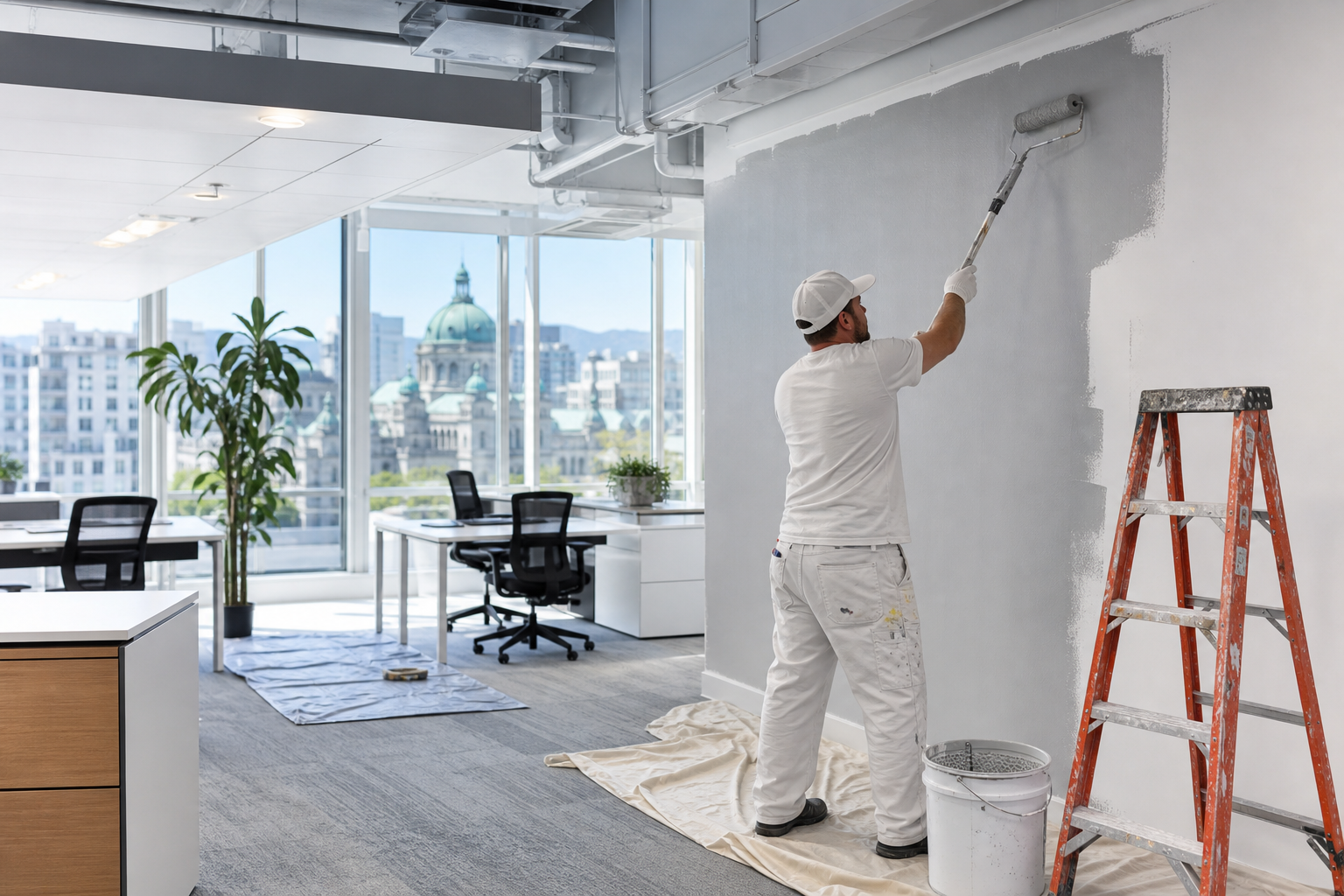
Office interior painting Victoria BC: contractors, schedules and finishes
Quick comparison summary for office decision-makers
If you need office interior painting in Victoria BC, focus on five attributes that separate dependable commercial contractors from general house painters: commercial experience, scheduling and disruption control, surface preparation standards, paint formulation and VOC policy, and bid and contract clarity. Use this one-page checklist to shortlist bidders and ask targeted questions later in the process.
- Commercial experience, look for tenant improvements, strata or multi-floor office work and verifiable references. Cornwall Painting lists commercial and tenant-improvement capabilities on its service pages, which is the type of portfolio to request when you shortlist contractors (Cornwall Painting).
- Scheduling and disruption, confirm night and weekend options, phased painting plans, and a communication protocol for occupied spaces.
- Surface prep, require documented cleaning, patching, sanding, priming and masking. Industry guidance notes that proper preparation is the majority of a great paint job (Colour Concept).
- Paint type and VOCs, specify finishes by room function and decide whether low-VOC or zero-VOC products are mandatory for your staff and lease obligations. Choose quality formulations suited to usage patterns rather than the cheapest option (Consumer Reports).
- Bids and warranties, compare line-item scopes, specific product names and sheen, labour versus materials, contingency allowances, and warranty language about adhesion and touch-ups.
What to compare: contractor qualifications and commercial experience
For offices you want proof the contractor has done similar, occupied-site work. Ask for recent projects that match your scale and complexity, such as phased multi-floor painting, tenant improvements, or strata work. Request contactable references and at least two photos or a short portfolio showing before and after examples. Cornwall Painting highlights commercial and builder project capability on its site; use that as a model for the kind of portfolio you should request (Cornwall Painting).
Confirm business essentials that reduce risk: current general liability insurance, registration with WorkSafeBC or the applicable authority, and written estimates on company letterhead. A reputable checklist for choosing painters suggests these verifications as part of the homeowner and commercial selection process (How to Choose the Right Painter in BC).
Scheduling and minimising disruption in occupied offices

Decide whether your priority is speed or minimal disruption. Contractors typically offer three approaches:
- Daytime phased work, paint high-use areas in off-peak hours and close individual rooms briefly, lower labor premium but requires careful coordination.
- Night and weekend shifts, near-zero daytime disruption at a higher hourly cost, commonly used for reception, open plan floors, and continuous operations.
- Temporary relocations, move teams out of a zone while it is repainted, useful for open plan reconfigurations but more costly and logistically heavier.
Ask bidders for a sample schedule for your site, a clear plan for dust and odour control, and a communication plan for daily updates. Cornwall Painting emphasises flexible scheduling to minimise disruption on commercial jobs, which is the sort of assurance to expect when you compare proposals (Cornwall Painting).
Surface preparation and quality standards that predict longevity
Surface preparation is the single biggest predictor of a long-lasting finish. Industry guidance puts strong emphasis on cleaning, patching, sanding, priming, and proper masking before finish coats are applied; some trade sources describe preparation as the majority of a great paint job (Colour Concept).
Require bidders to document prep steps and provide photographic records. A practical prep checklist to include in the contract:
- Clean surfaces and remove contaminants, grease and mildew.
- Repair and tape drywall, sand rough spots, and remove loose old coatings.
- Prime patched or raw substrates with a specified primer type.
- Mask and protect floors, fixtures and furnishings with labelled materials.
- Provide test patches for colour and sheen approval where large areas will be finished.
For examples of what long-lasting interior painting results can look like, review local portfolio pieces such as the long lasting interior painting results page used by other Victoria contractors to communicate durable outcomes (long lasting interior painting results victoria bc).
Paint formulations, finishes and VOC policies for occupied workplaces
Choose the paint formulation and sheen by room function. Consumer testing and buying guides emphasise that reputable contractors select paints suited to the situation rather than the lowest-cost brand (Consumer Reports, Consumer Reports paint buying guide).
General recommendations by room:
- Meeting rooms and private offices, eggshell or low-sheen for a balance of low glare and washability.
- Corridors and high-traffic areas, satin or washable eggshell for durability and easy cleaning.
- Break rooms and kitchens, satin or semi-gloss for moisture resistance and stain cleanability.
Low and zero-VOC options reduce odour and improve comfort during occupancy, but they can have different tinting and coverage characteristics. Home Depot Canada and Consumer Reports offer practical guidance on finish selection and durability considerations that apply in occupied commercial interiors (How to Choose Interior Paint, Consumer Reports).
Bids, contracts and warranties: how to compare price fairly

Ask for line-item bids that identify quantity of square metres, product names, sheen, number of coats, labour hours, and contingency for hidden repairs. A fair comparison shows materials and labour separated, plus a clear payment schedule and holdbacks for late deficiencies.
Practical contract items to require:
- Named paint products and sheen with manufacturer data sheets attached.
- Detailed prep scope and photographic records before finish coats.
- Warranty language for adhesion, peeling, or unacceptable coverage with a one-year minimum on workmanship recommended by many commercial clients.
- Change-order policy and approval thresholds for unexpected repairs.
Colour Concept’s homeowner checklist flags the absence of a written contract as a major red flag; apply the same rule for commercial jobs (How to Choose the Right Painter in BC).
Common objections and decision criteria you will face
Expect the following realistic objections and how to weigh them:
- Higher cost for off-hours work, offset by less downtime, choose off-hours when staff time equals or exceeds the premium.
- VOC concerns, require low-VOC or zero-VOC products and schedule work in phases to reduce exposure, confirm vendor SDS sheets are provided.
- Dust and disruption, demand negative-pressure containment, HEPA filtration for sensitive areas, and daily clean-ups in the contract.
- Building or strata rules, request the contractor confirm permits, elevator bookings and insurance limits in writing before work begins.
Decision criteria, rank bidders on (1) proven commercial experience, (2) disruption minimisation, (3) documented surface prep, (4) product quality and VOC policy, and (5) contract transparency and warranty.
A practical questions checklist to use when you interview bidders
Use this checklist verbatim when you call or meet bidders. Score each answer 1 to 5 to compare submissions objectively.
- Have you completed projects like ours in Victoria in the last 24 months? Ask for project names and two references.
- Will you provide a written schedule showing start and finish by zone and proposed off-hours shifts?
- Describe your surface-prep steps for plaster, drywall and previously painted metal. Will you provide photographic records before finish coats?
- Which paint brands and product names will you use? Provide technical data sheets and VOC ratings.
- What containment, dust control and odour mitigation measures will you use in occupied spaces?
- Show your insurance certificate and WorkSafeBC registration. Who is the on-site foreperson for our job?
- What is your warranty for workmanship and how do you handle touch-ups post-handover?
- How do you price change orders for hidden repairs and what is your payment schedule?
Scoring method, allocate 20 points for commercial experience, 20 for scheduling and disruption plan, 20 for surface prep detail, 20 for product and VOC policy, and 20 for contract and warranty clarity. Total the scores and prioritise the top two bidders for reference checks and a site walkthrough.
Frequently asked questions
What sheen and paint formula should I choose for meeting rooms, corridors and kitchens in an office?
Meeting rooms typically use eggshell for low glare and moderate washability, corridors benefit from satin for durability and ease of cleaning, and kitchens or break rooms often need satin or semi-gloss because of moisture and stains. Consumer Reports and Home Depot Canada provide testing and practical guidance on matching finish and formulation to room function (Consumer Reports, Home Depot Canada).
How can a contractor minimise odour and VOC exposure while painting occupied offices in Victoria BC?
Require low or zero-VOC paints, schedule high-odor work off-hours, vent and filter the area during and after application, and use water-based products where appropriate. Ask bidders to provide product SDS sheets and VOC ratings with their proposal so you can confirm compliance with your workplace health policy (Consumer Reports).
What should a fair commercial painting contract include for a multi-floor or phased office project?
The contract should list the exact product names and sheen, a detailed prep scope, the phased schedule, photographic records of prep, a payment schedule with holdbacks, insurance and WorkSafeBC confirmation, and a clear warranty for workmanship. Colour Concept flags the lack of a written contract as a major warning sign (Colour Concept).
How do I verify a painter’s commercial experience and check references for similar office jobs in Victoria?
Request project names and client contacts, visit a recent site if possible, and ask for before and after photos and a brief scope report. Confirm the reference was satisfied with scheduling, disruption management, and the contractor’s warranty handling. Local contractors such as Cornwall Painting publish examples of commercial services that illustrate the type of proof you should request (Cornwall Painting).
Will low-VOC paint perform as well as conventional paint in a high-traffic office environment?
High-quality low-VOC formulations from reputable manufacturers now perform comparably to traditional paints for adhesion and washability, but coverage and tinting behaviour can differ. Always request manufacturer technical data sheets and, where possible, test patches in a high-traffic corridor to confirm performance before full application (Consumer Reports).
Contact Cornwall Painting to schedule a site walkthrough and get a detailed, line-item proposal tailored for office interior painting in Victoria BC.